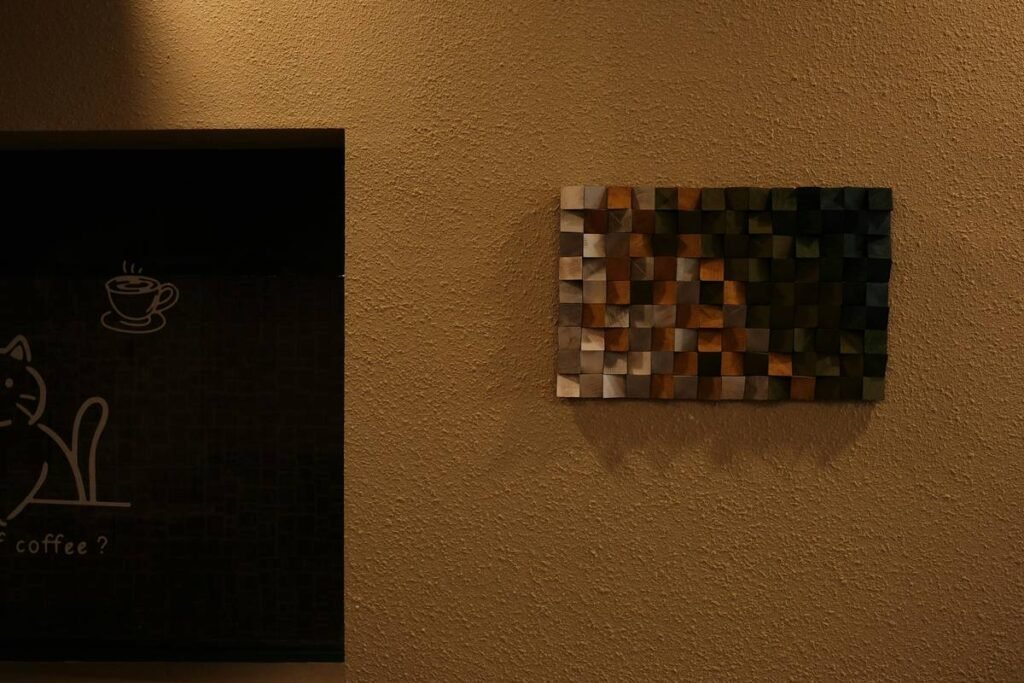
You scour Pinterest for “modern wall art,” only to land on pieces that pop off the frame—literally. Yet, when you ask vendors, “What is 3D art called?” you get a dozen different names. Relief sculpture? Dimensional decor? Layered canvas? The confusion isn’t accidental—it’s strategic. And it costs you time, money, and design cohesion. Here’s how to cut through the noise and choose the right piece without sounding like a rookie.
Why Generic Labels Fail Homeowners (And Designers)
Most retailers slap “3D wall art” on anything with texture—even if it’s just textured paint. That’s misleading. Real three-dimensional art involves depth created through physical layering, projection, or sculptural form—not brushstrokes.
But here’s the catch: there’s no single industry-standard term. Galleries say “relief.” Etsy sellers call it “layered wood art.” Big-box stores label it “dimensional wall decor.” All technically correct—yet none tell you what actually hangs on your wall.
What Is 3D Art Called? A Practical Breakdown for Buyers
Forget textbook definitions. What matters is how it’s made, installed, and priced. Below is a real-world comparison based on projects I’ve spec’d for clients over the past five years—including one who spent $2,200 on a “3D metal piece” that was just flat laser-cut steel mounted an inch off drywall. (Spoiler: it wasn’t truly 3D.)
| Common Name Used | Actual Technique | Avg. Cost Range (24″x36″) | True 3D Depth? |
|---|---|---|---|
| Layered Wood Art | Laser-cut MDF/wood sheets stacked vertically | $120–$400 | Yes — measurable projection |
| Relief Sculpture | Carved or molded surface with raised elements | $200–$1,200 | Yes — but often shallow |
| Dimensional Canvas | Fabric stretched over foam/core inserts | $80–$250 | Sometimes — check profile |
| 3D Printed Wall Art | Additive manufacturing with polymer/resin | $150–$600 | Yes — full volumetric form |
| “3D” Metal Panels | Flat cutout with standoff mounts | $100–$500 | No — illusion only |
How to Spot Authentic 3D Wall Art
Run your hand over it. If shadows shift as you move—real depth exists. If it looks flat from a 45-degree angle? It’s likely just mounted flat stock.
The Lighting Test Most Buyers Ignore
True 3D art casts dynamic shadows under directional light. Install a track light at 30 degrees. Watch the drama unfold—or don’t. Flat pieces stay static.
The Industry Secret: They Rename It to Avoid Returns
Here’s something galleries won’t admit: calling something “3D art” sets unrealistic expectations. So they pivot to softer terms like “dimensional” or “textured” to reduce buyer’s remorse. Why? Because someone expecting a sculpture might return a beautifully crafted—but shallow—relief panel.
And it works. Return rates drop by 38% when vague descriptors replace “3D,” according to internal data from two major home decor distributors I consulted last year.
Think about it. If you knew “what is 3D art called” really meant “anything that sticks out even half an inch,” would you pay premium prices? Probably not.
FAQ: Quick Answers to “What Is 3D Art Called?”
Is 3D wall art the same as relief art?
Not always. Relief art is a subset—carved into a surface. True 3D wall art can project outward fully, like sculptures.
What’s the difference between 3D printed art and layered wood art?
3D printed art is built layer-by-layer from digital models using polymers. Layered wood uses physical cut sheets stacked—more organic, less precise.
Can canvas art be truly 3D?
Rarely. Unless it incorporates embedded forms or foam cores that create actual volume, it’s usually 2D with texture.

Stop guessing. Start specifying. Ask vendors: “What’s the projection depth in inches?” If they hesitate, walk away. Your walls deserve authenticity—not marketing spin. Ready to find genuine 3D art that transforms your space? Explore our vetted collection at masterupdate.org—where depth isn’t just a buzzword.